

Picture a Tuesday at 3pm.
The house is quiet.
The dishwasher hums.
Your phone sits face up on the counter, and it hasn't lit up since lunch.
Maybe your kids are in their twenties, building lives a time zone away. You still go to work. You're good at it. And on the drive home, one question rides shotgun.
What now?
Maybe your kids have kids of their own, and the calls come on Sundays. For thirty years you were the one everyone needed. The one who knew where everything was.
Then one day you hear yourself say it, calmly, like a fact.
"At this age, you just become invisible."
Women tell me some version of that sentence all the time.
"I'm just an appendage now."
"I feel like I'm on the outside looking in."
"The silence is deafening."
"Is this all there is?"
Here's what I hear underneath every one of them.
She's waiting.
For the phone to ring. For someone to need her. For permission to start her own life again.
The plant study
I've been reading Shawn Achor's new book, The Power of Beliefs. One chapter is built on a single belief.
"I matter."
He walks through the research of Gordon Flett, who has spent his career studying what he calls mattering. It comes down to four things. Feeling important. Feeling noticed. Feeling needed. Feeling appreciated. When even one of them goes missing, the belief "I matter" gets quieter.
Then Achor tells the story that stopped me.
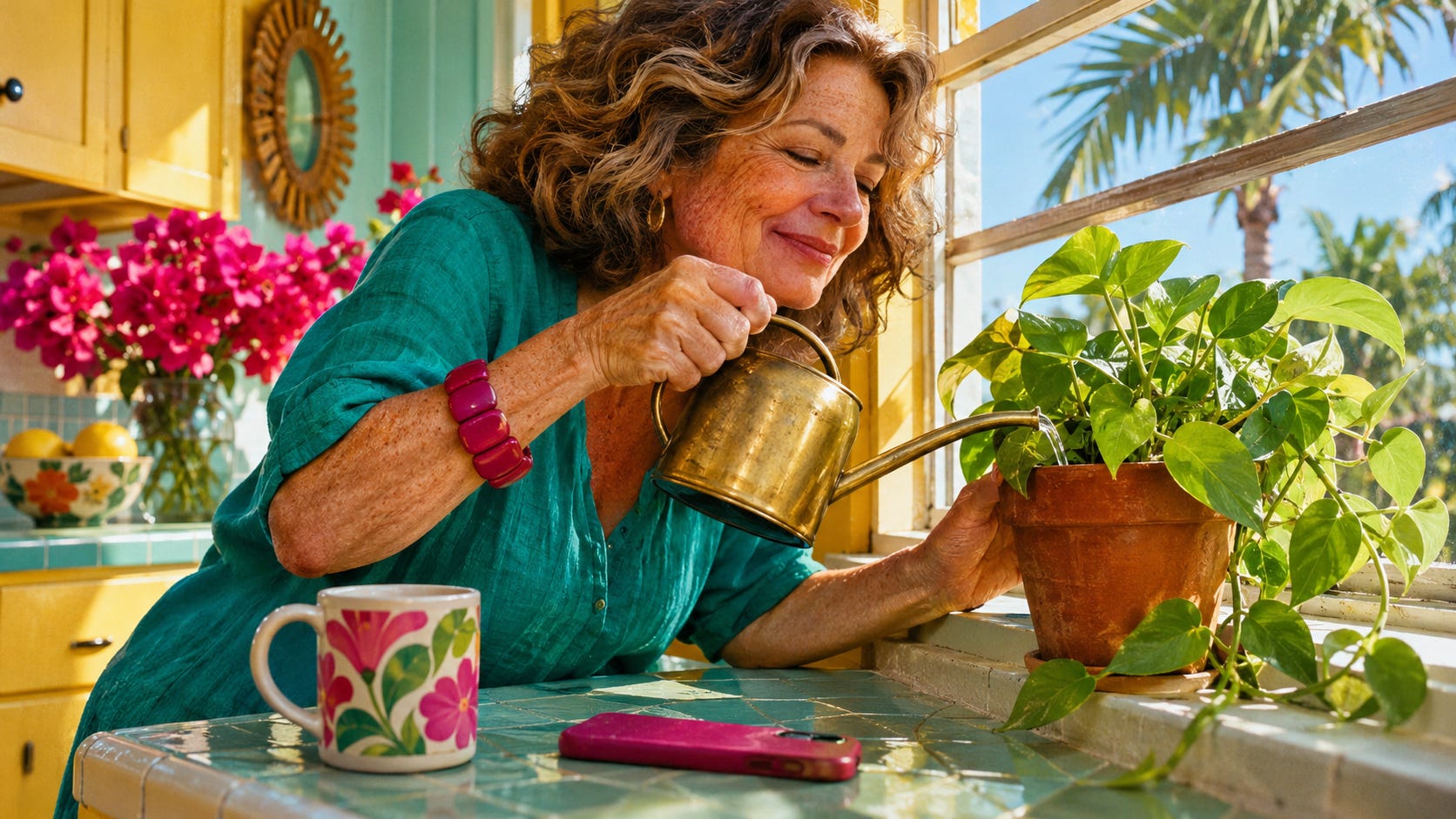
Researchers Ellen Langer and Judith Rodin gave plants to residents of a nursing home. Everyone got a plant.
In one group, the staff took care of it.
In the other group, the residents did.
Same plant. Same building.
The women and men who watered their own plant became more alert, and their well-being climbed.
The difference was one small responsibility.
Something was counting on them.
And then Achor writes a line I've read ten times since.
"Loneliness is not about empty rooms but about empty roles."
That's the quiet house.
The rooms emptied out first. And somewhere along the way, the roles went with them.
Her story
One of my private clients, a woman in her seventies, had stopped expecting anyone to notice her.
She never decided this.
It just quietly became what she believed.
She didn't get more people to notice her.
She started noticing herself.
She started asking what she wanted.
Then she started taking care of herself, on purpose.
Last December she said something I wrote down word for word.
"For the first time in my life, I feel like I matter, to me."
And then this.
"I'm having fun taking care of myself. That's never happened before."
That's the payoff of the payoff.
Her life stopped being a waiting room.
It became a place she gets to live again.
Three things I wish I'd known sooner
"Invisible" is a forecast dressed up as a fact. The research in Achor's book keeps landing in the same place: what we believe changes what happens next.
Mattering starts with your own attention. The residents with the plant mattered to the plant first. You get to be the first one who notices you.
Empty roles can be filled again. And this time, you get to choose the role.
Here's what I believe now, at 69.
The second half of my life is a place I get to live in.
I get to find myself again.
I get to trust my own wisdom, and have my own back.
Come take one sentence apart with me
On Wednesday, November 4, at 7pm Eastern, I'm going live here on Substack for the first Says Who: The At This Age Workshop. We're taking apart one sentence together.
"At this age, you just become invisible."
It comes with a paid subscription, $10 a month. I'd love to see you there.
Until then, one question to sit with.
What's one role you'd love to have back, or try for the very first time?
Talk soon,
Debi